Industry
B2B SaaS for Enterprise
Client
Atlassian / Deviniti
Jira Smart Defaults — Automation Without the Guesswork
🔑
Key Achievement
I redesigned Smart Defaults from a hidden, syntax-based feature into a guided automation flow that requires no documentation — reducing setup time from minutes to seconds, improving adoption signals and restoring the feature’s competitive value against Jira Automations.
I also introduced microdiscovery — a fast, lightweight research model that replaced slow reporting with insight → delivery cycles.
My role
As the Product Designer, I owned discovery, UX problem framing and the end-to-end redesign of Smart Defaults.
I led microdiscovery sessions to uncover real blockers, translated insights into design strategy, and created the final interaction flows and specifications.
Working closely with the PO, developers, QA and technical writer, I supported implementation and validated the experience before release.

Context — Why This Feature Mattered
Smart Defaults was intended to be the automation engine of Issue Templates Cloud — especially valuable for enterprise teams creating thousands of issues weekly, where efficiency compounds into meaningful time saved.
But usage revealed a gap between potential and reality.
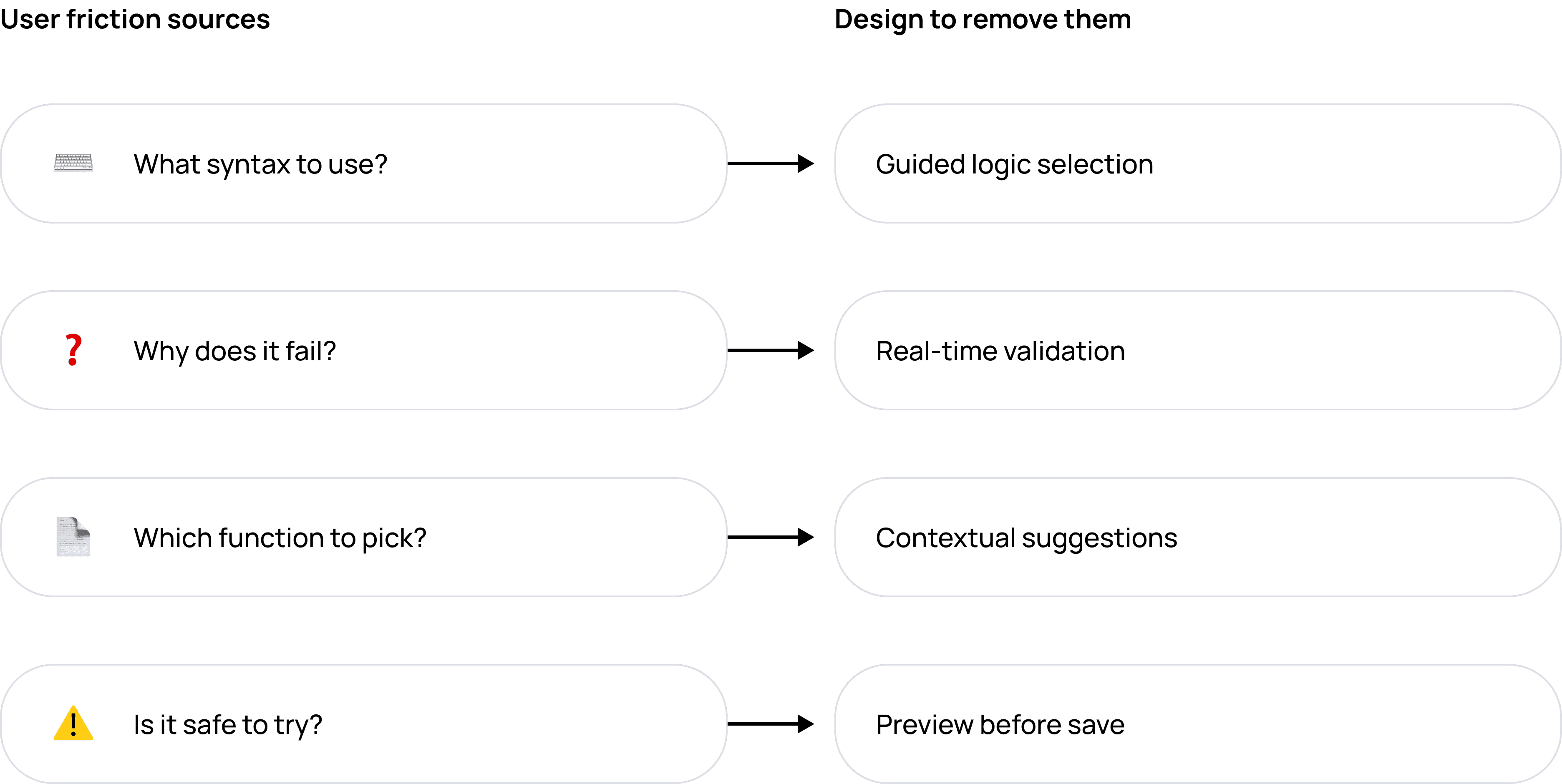
The feature was hard to find, required quasi-JQL syntax, offered no validation and produced cryptic red errors like “No value or inconclusive.”
Most users never reached a working rule. Those who failed once rarely attempted again.
Baseline:
(NDA)% adoption overall
(NDA)% in >1k orgs
low conversion → low retention influence
Jira Automations gaining traction
This wasn’t a UI tweak — accessibility and confidence stood in the way of value.
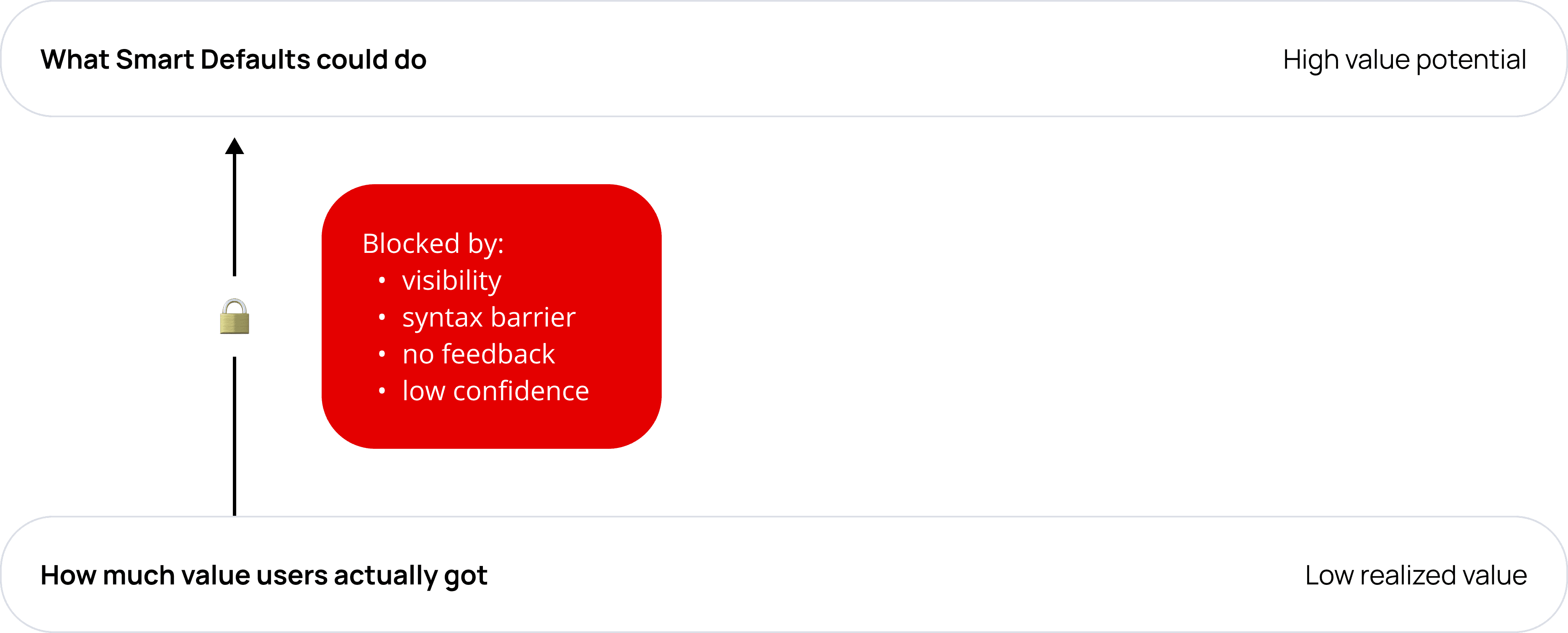
Before redesign — value existed only for those who could read the docs
To create rules, users copied expressions from documentation and hoped they worked — trial-and-error instead of guided configuration.
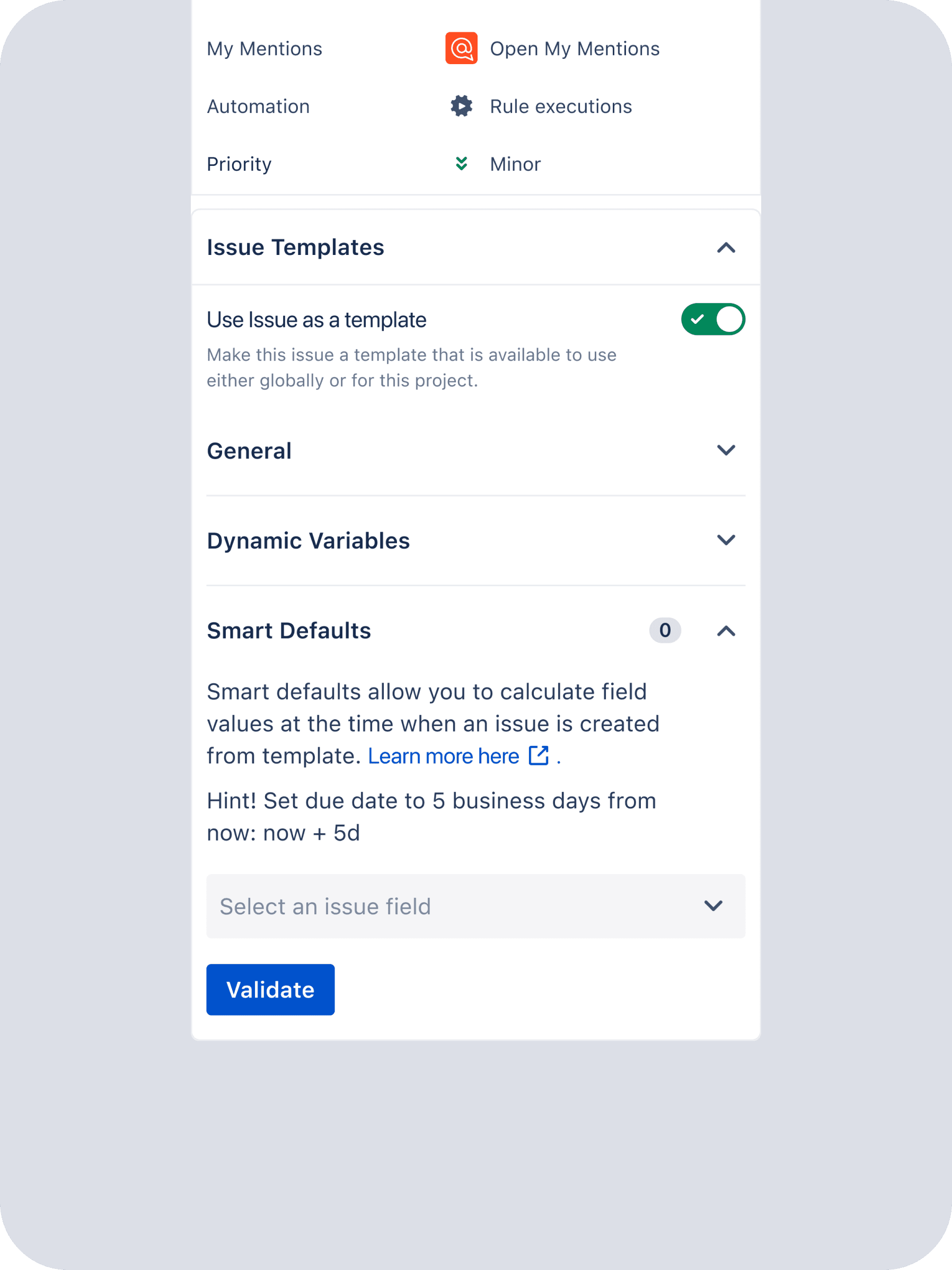
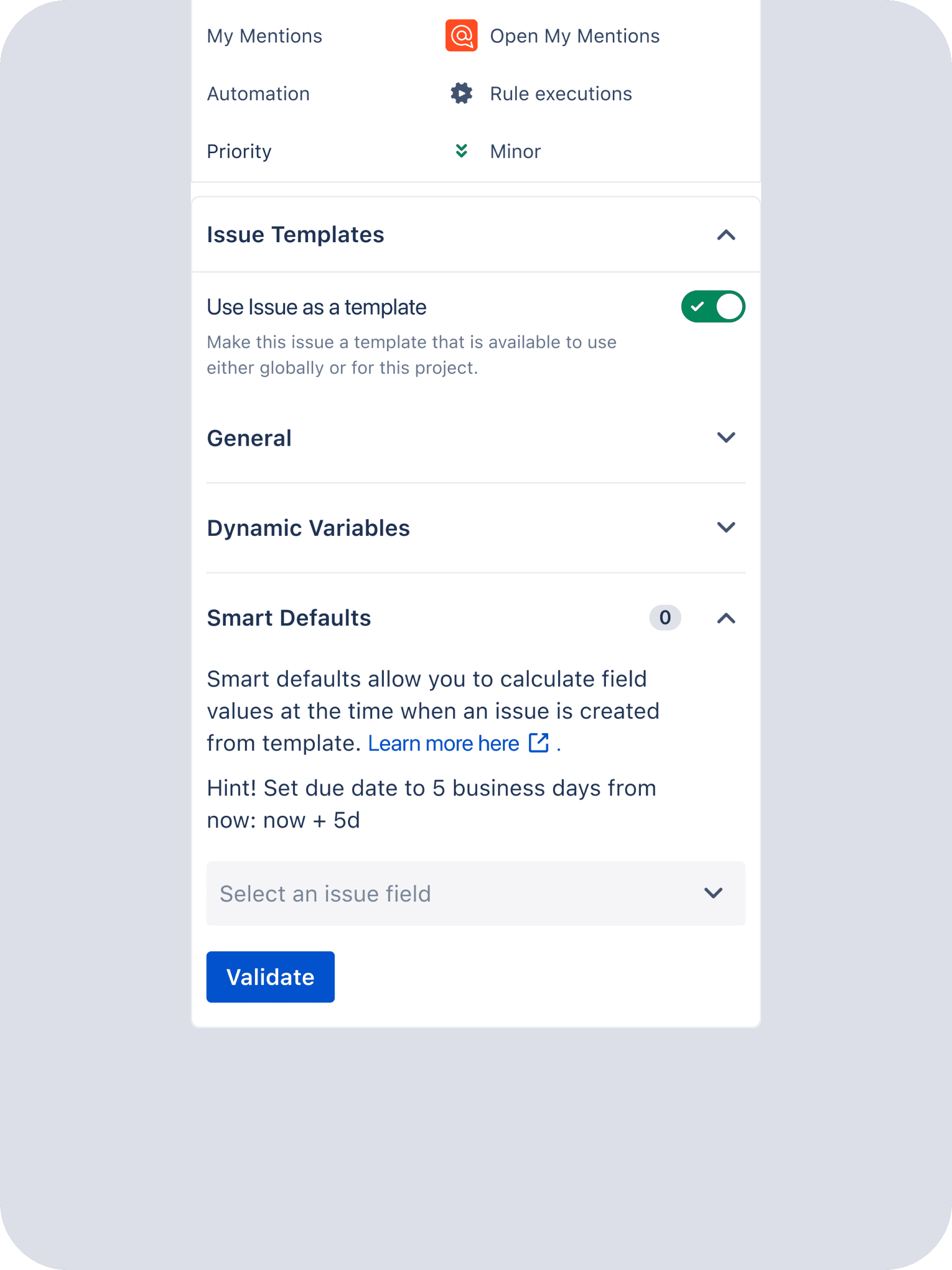
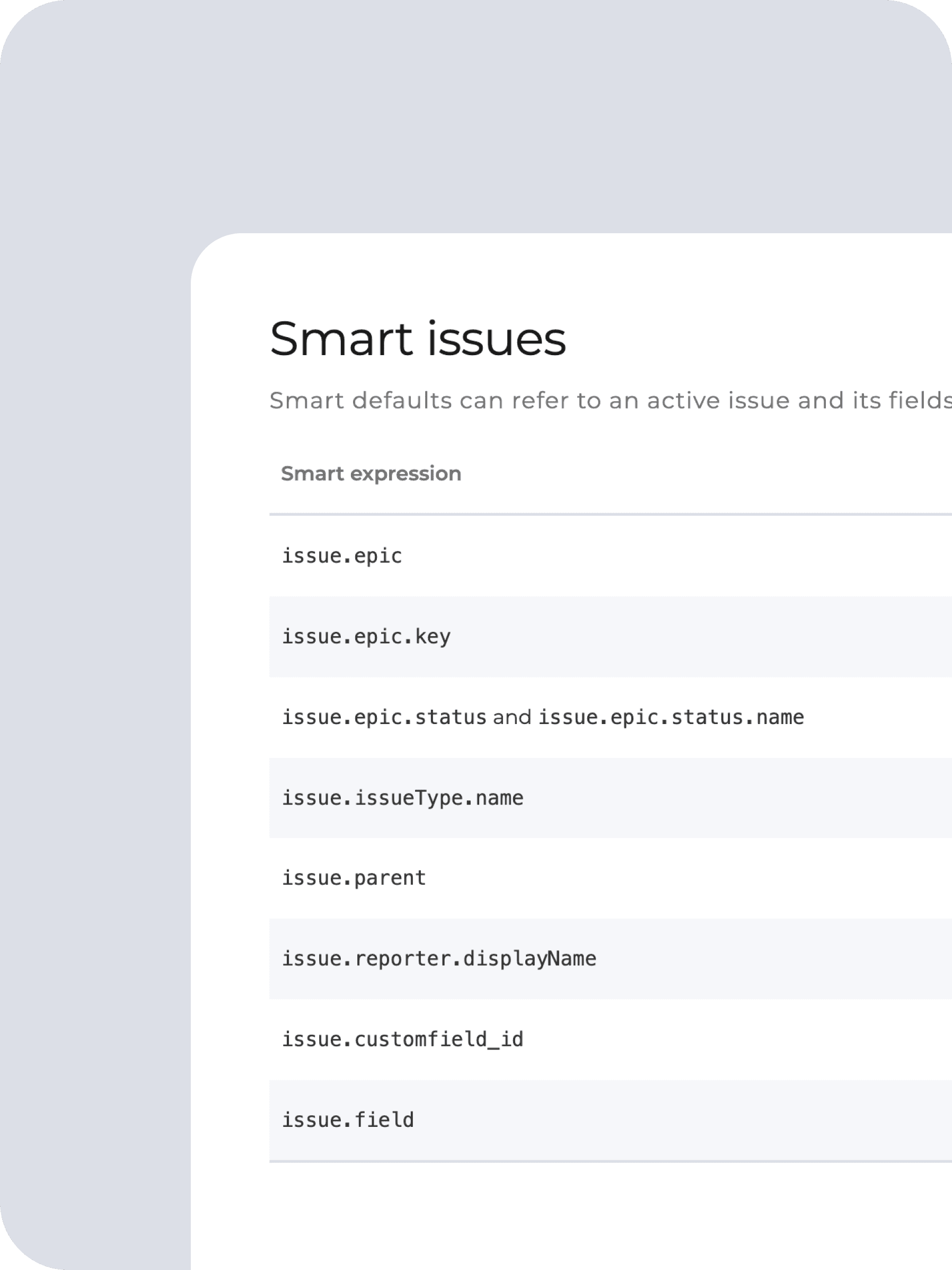
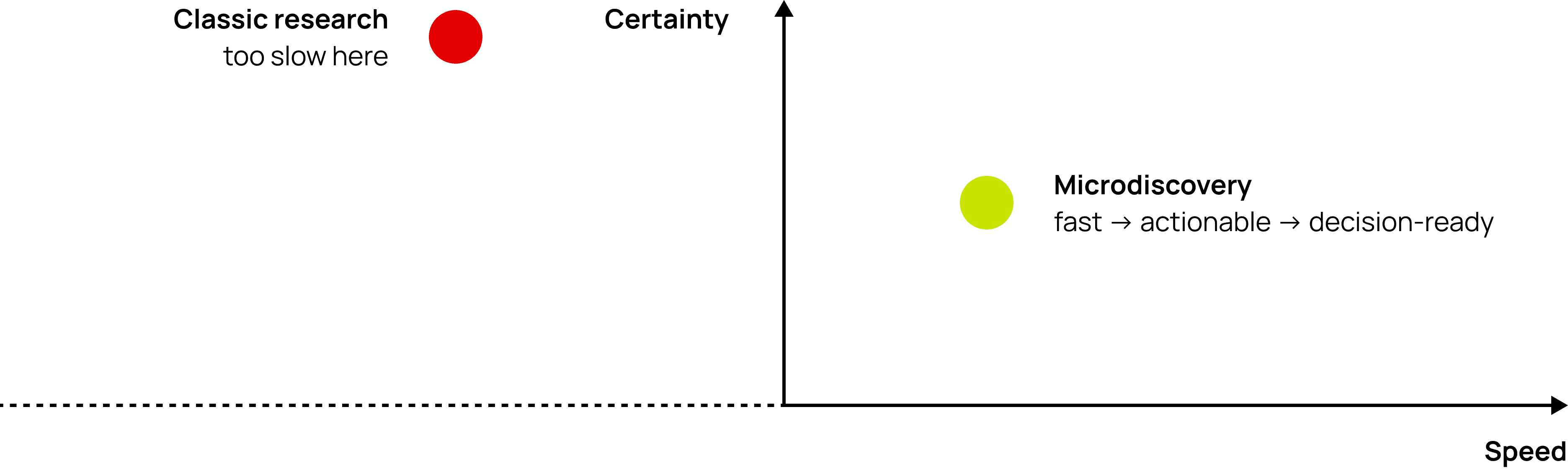
Microdiscovery — Because Research Had to Move Faster Than Competition
We had data showing drop-off — but not insight into why.
A classic research cycle (recruitment → synthesis → reporting) risked slowing delivery when market timing mattered.
So I introduced and led microdiscovery:
Short weekly sessions observing real configuration attempts → immediate insights → decisions made while the context was still fresh.
Instead of surveys or opinions, we watched people configure rules live — Jira global admins, project admins, PMs/POs.
What consistently broke the workflow:
users couldn’t find where Smart Defaults lived
syntax input stopped progress instantly
setup felt like trial-and-error scripting
lack of validation meant no confidence to proceed
dropdown functions were technical and context-free
Main insight:
Users weren’t struggling with automation itself —
they were unsure how to do it safely.
Microdiscovery gave us clarity fast and allowed us to move into design without delay.
From Insight to Strategy → to Decisions
Research made the path forward clear:
The feature didn't need more power — it needed guidance, visibility and predictability.
I defined a principle to anchor design decisions:
Smart Defaults must work without documentation, without syntax, and without fear of breaking something.
Rather than adding new capability, the redesign reduced friction and helped users succeed on the first attempt.
This translated directly into the product:
Delivery — Design → Engineering → QA
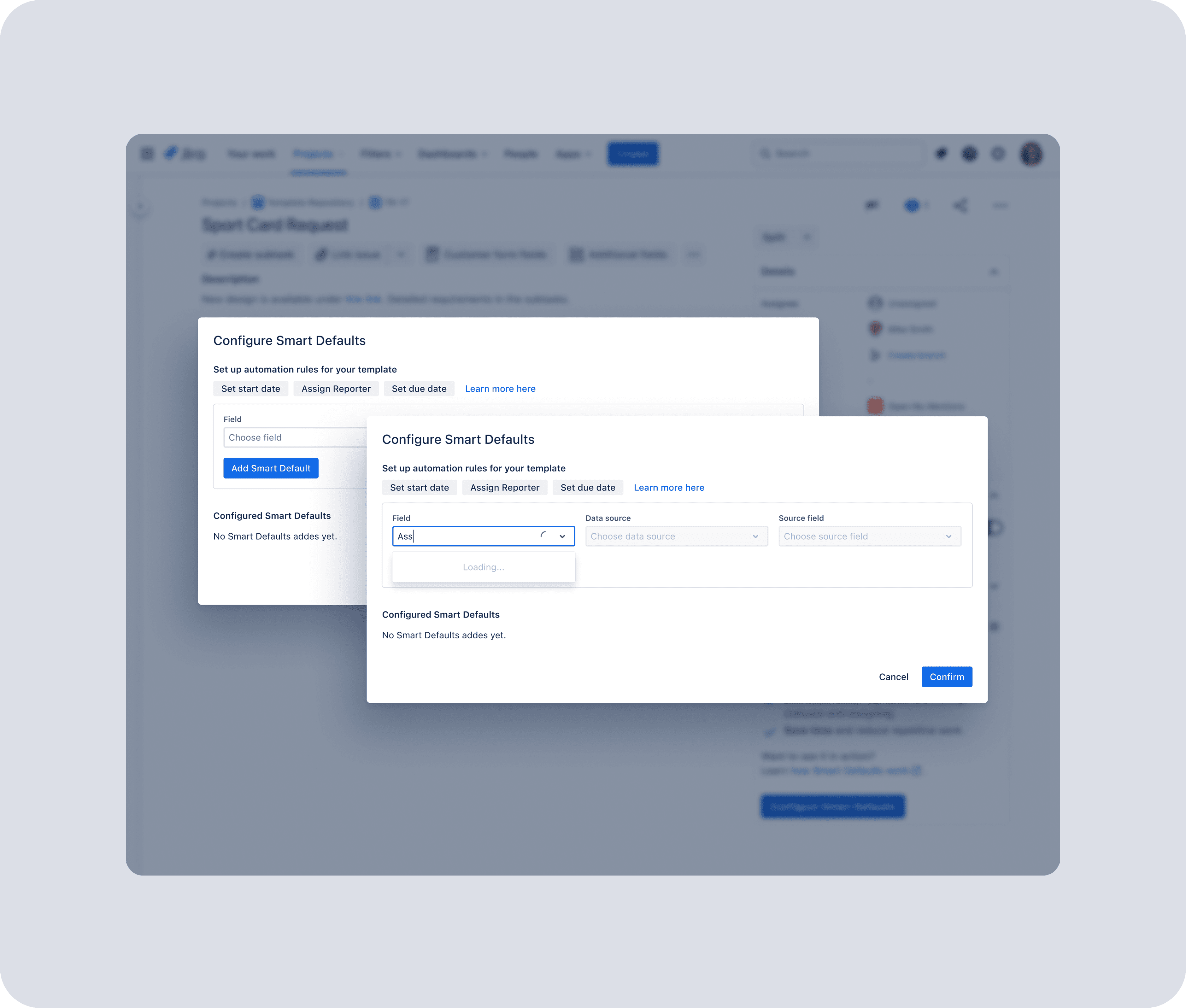
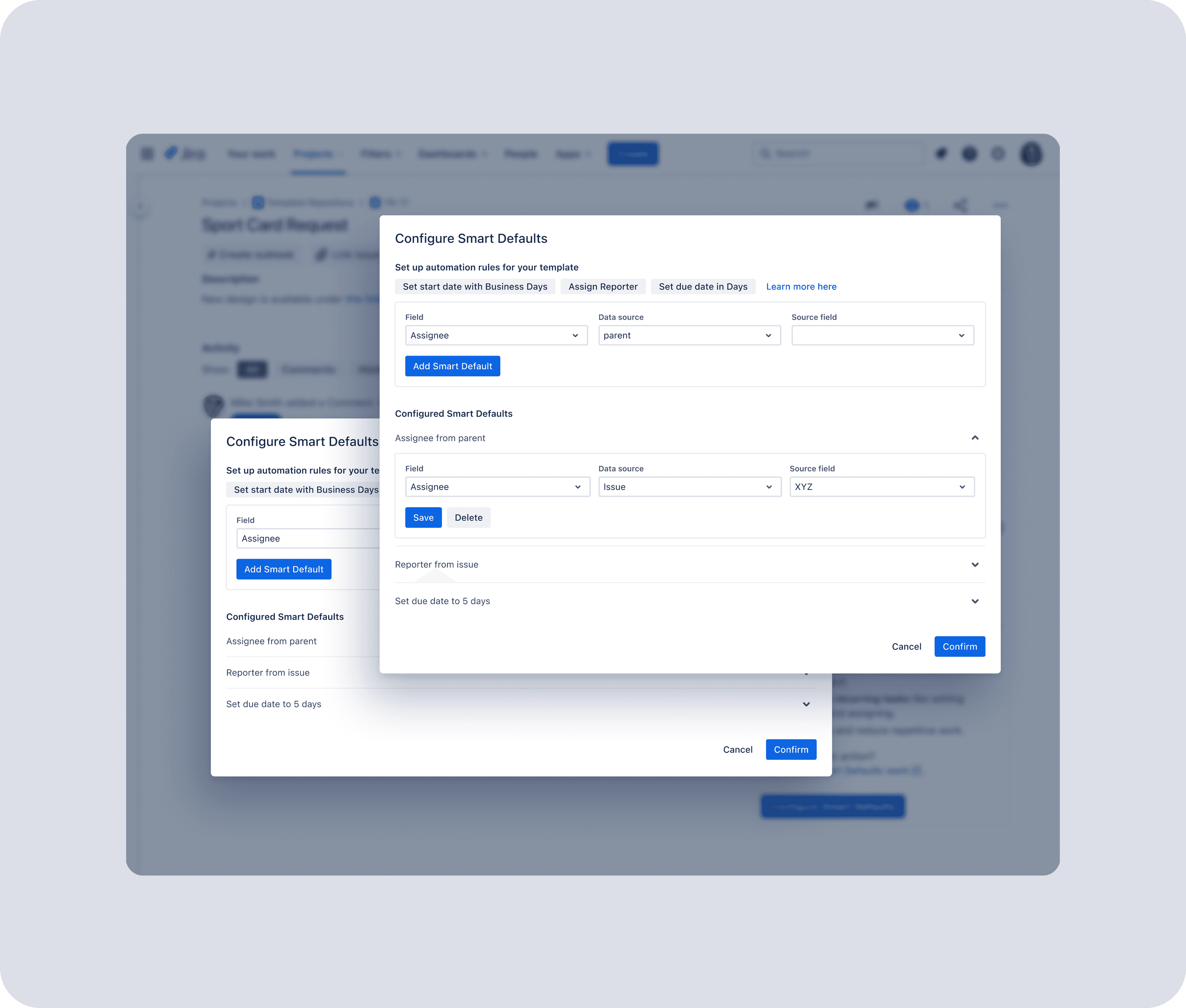
With direction set, I designed a new guided modal flow:
Select field → choose logic → preview → confirm
No JQL. No guesswork.
The solution was delivered iteratively and closely with engineering — ensuring implementation matched experience, not just visuals.
In delivery:
worked with developers as components were built in Storybook
aligned documentation details with the technical writer
collaborated with QA to test behaviour and failure states
verified final staging build before release
Impact — Product, Users, Organization
For the organization
setup without documentation or syntax knowledge
validation builds confidence instead of hesitation
logic behaves predictably, not by trial-and-error
configuration now seconds, not minutes
advanced rules achievable without support
For the product
adoption signals improved
Marketplace rating increased post-release
automation regained competitive value vs Jira Automations
friction no longer blocked discovery and activation
For the organization
Microdiscovery proved effective in this project — fast insight loops allowed us to move from research to decisions without delay.
The approach showed potential to reduce research → delivery friction and could be expanded further as a repeatable way of validating and refining product changes.
Smart Defaults became a feature users could configure with confidence — and the team gained a practical model for learning quickly when needed.